Five years ago most cannabis consumers had never heard of THCV. Today it’s one of the most commonly requested minor cannabinoids at many dispensaries. It shows up on labels of certain strains and on blended vape cartridges and tinctures, often described as energetic, uplifting, or daytime-friendly. Here’s what’s actually happening with this cannabinoid and why it’s earned a real following.
THCV (tetrahydrocannabivarin) is a cannabinoid related to THC but with a slightly different molecular structure. At low doses many consumers report little to no intoxicating effect. At higher doses some consumers describe the experience as more clear-headed and energizing than traditional THC products. Most cannabis flower contains very small amounts of THCV. Specific strains and concentrated products are bred or formulated to bring the percentage up.
Curious about THCV? Check the Cannabis & Glass or stop in and we’ll show you what’s in stock.
How THCV Differs From Traditional THC
Structurally, THCV has a shorter side chain than THC (three carbons instead of five). That subtle difference changes how it interacts with your cannabinoid receptors. The effect profile most people report:
- More clear-headed than typical THC effects
- Less couch-lock and less sedation
- More energetic, sometimes compared to a cup of coffee
- Less appetite stimulation (THCV is often described as the opposite of “the munchies”)
None of this is universal. Cannabis hits everyone differently, and THCV is no exception. What’s pretty consistent is the “lighter and clearer” character versus standard THC.
THCV and THC share the same backbone but differ in one structural detail that changes the experience. THC has a 5-carbon side chain; THCV has a 3-carbon side chain. That shorter side chain changes how the molecule interacts with your cannabinoid receptors. At low doses THCV is thought to block the CB1 receptor (the same receptor THC normally activates), which is why low-dose THCV is generally non-intoxicating and is associated with appetite suppression rather than the appetite stimulation classic THC produces. At higher doses THCV switches roles and becomes a partial CB1 agonist, producing a milder, shorter intoxicating effect than THC. Onset tends to be faster and duration shorter than equivalent THC products.
Will THCV get me high? At low doses, no. At higher doses, mildly. The intoxicating effect is generally lighter and more functional than THC.
Will THCV trigger a drug test? THCV can show up on some THC drug tests because the metabolites are structurally similar. Assume any THCV product carries drug-test risk.
Is THCV legal in Oregon? Yes, in licensed cannabis products sold through OLCC retailers.
What does THCV feel like vs THC? Many consumers report feeling more focused and less sedated compared to traditional THC products. Some compare it to a clean cup of coffee with a slight cannabis edge.
THCV-Rich Strains
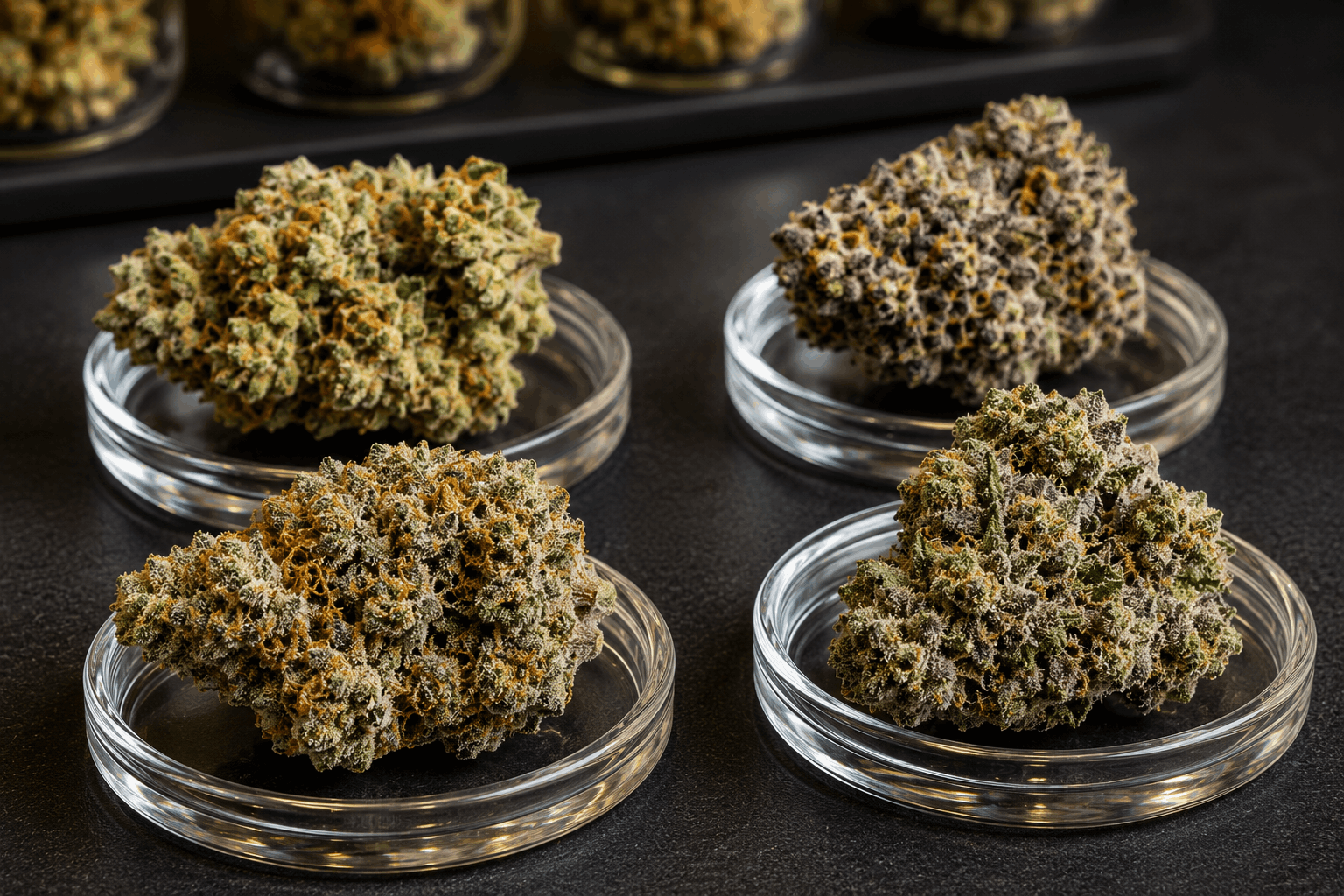
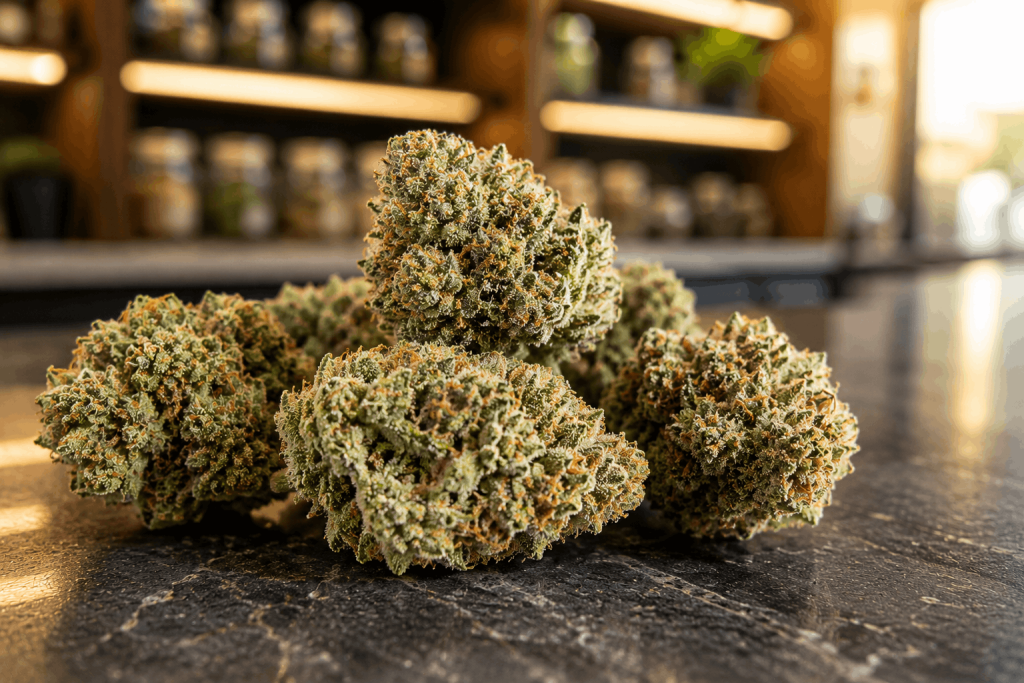
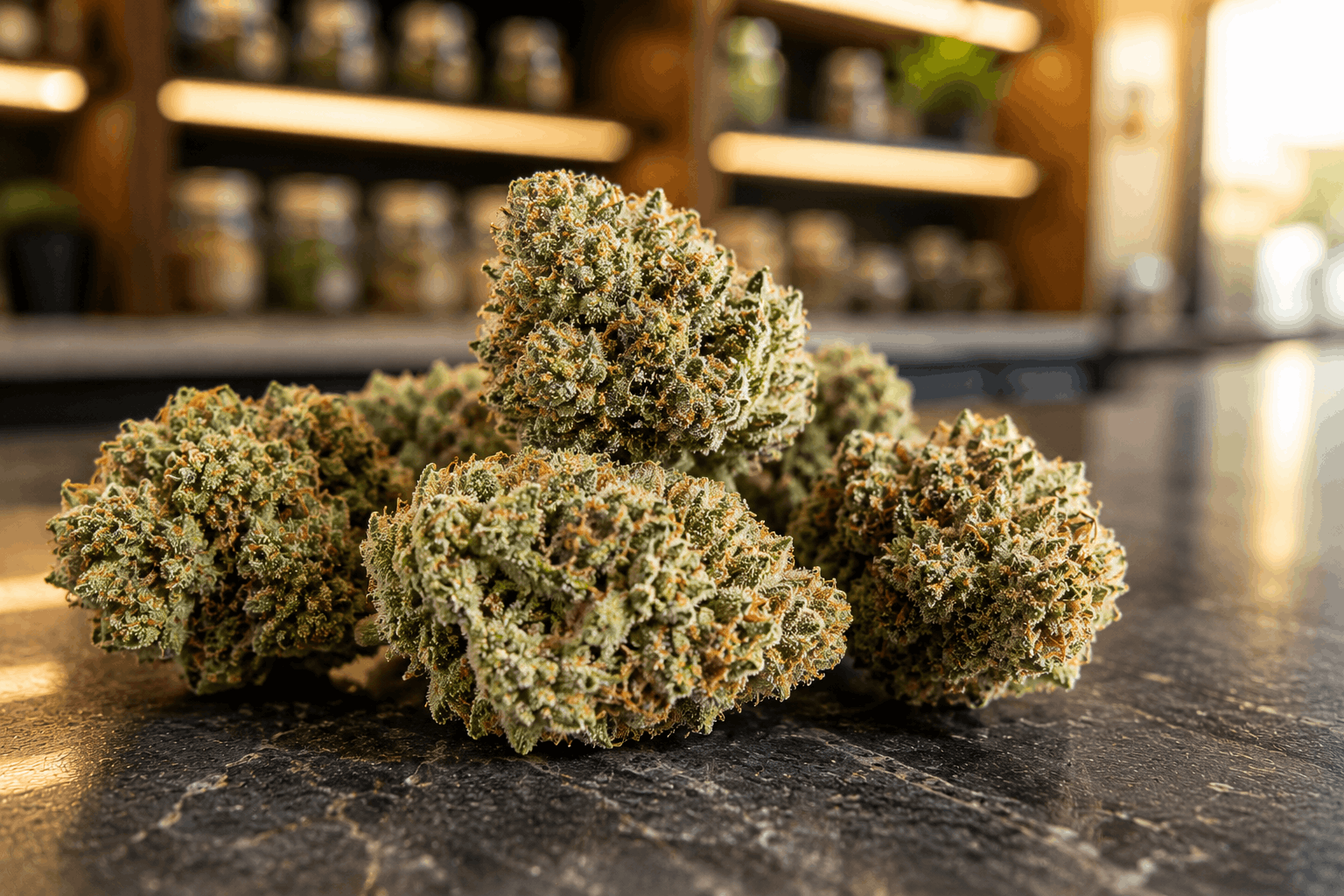
Most flower has THCV under 1%. Some strains push higher (3 to 6%), and breeders are working on cultivars with even more. Examples of strains historically associated with higher THCV:
- Durban Poison (the classic example)
- Doug’s Varin
- Pink Boost Goddess
- Black Beauty
Availability varies. Always check the lab label for actual THCV percentage rather than relying just on the strain name. Two batches of “Durban Poison” can vary significantly in their THCV content depending on grow conditions and genetics.
THCV vs CBG
Customers often ask how THCV compares to CBG, since both are minor cannabinoids that show up on Oregon menus more often than they used to. CBG is non-intoxicating at any reasonable dose. THCV is non-intoxicating only at low doses; it produces a mild functional high at higher doses. CBG is most commonly associated with a calm, focused baseline feeling. THCV is more commonly associated with energy and reduced appetite. CBG production has scaled faster than THCV, so CBG-rich products are easier to find on most menus. If you’re trying to choose between them, ask what you want the product to do for you. Our CBG explainer covers CBG in more depth.
How to Read a THCV Lab Label
Oregon-tested cannabis products list the full cannabinoid breakdown on the label. Here’s what a THCV-forward flower label typically looks like:
- THC: 24.3% — the main psychoactive cannabinoid
- CBD: 0.1% — minimal CBD
- THCV: 2.8% — a meaningful percentage; most flower is under 1%
- CBG: 1.2% — minor CBG content
A flower at 2.8% THCV is on the high end of what’s commercially available. Anything above 1.5% is worth a closer look if you’re shopping THCV specifically. Always check the lab printout (the Certificate of Analysis or COA) rather than relying on the strain name alone, since the same strain can vary batch to batch. Our label-reading guide walks through what every line on a COA means.
Why THCV Is Showing Up on More Menus
Two reasons. First, the minor cannabinoid category has grown rapidly. Cultivators have been actively breeding for higher levels of THCV, CBG, CBN, and CBC — cannabinoids the early-2010s market mostly ignored. Doug’s Varin and Pink Boost Goddess are examples of cultivars specifically developed to push THCV content past 4%. Second, consumer demand has shifted. A meaningful share of customers want lighter, clearer experiences during the day and heavier, more sedating products at night. THCV fits the daytime use case in a way that high-THC indica strains don’t. As demand grew, processors started formulating vape cartridges and tinctures with elevated THCV ratios.
What Budtenders Usually Recommend
Customers interested in THCV are often looking for a daytime product or a cultivar that feels less heavy than typical high-THC flower. Budtenders here typically start by looking at both the THCV percentage and the terpene profile rather than focusing on a single cannabinoid number. Terpenes like pinene and limonene reinforce the energetic, focused character THCV is known for. If you walk in saying “I want energy and focus,” a budtender will usually pull a THCV-forward flower with a pinene-dominant terpene profile rather than chasing THCV percentage alone.
Where You’ll Find THCV on Our Menu
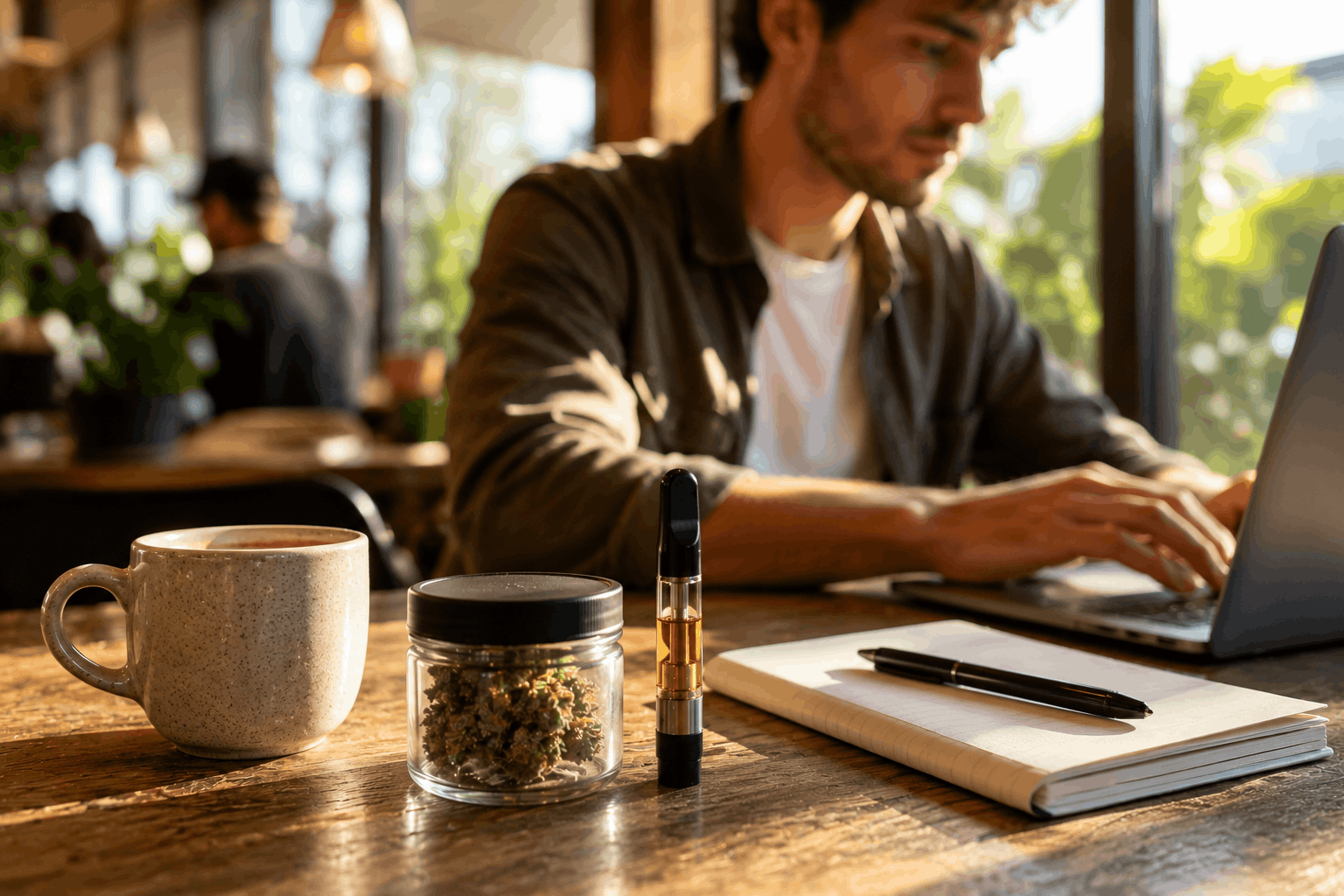
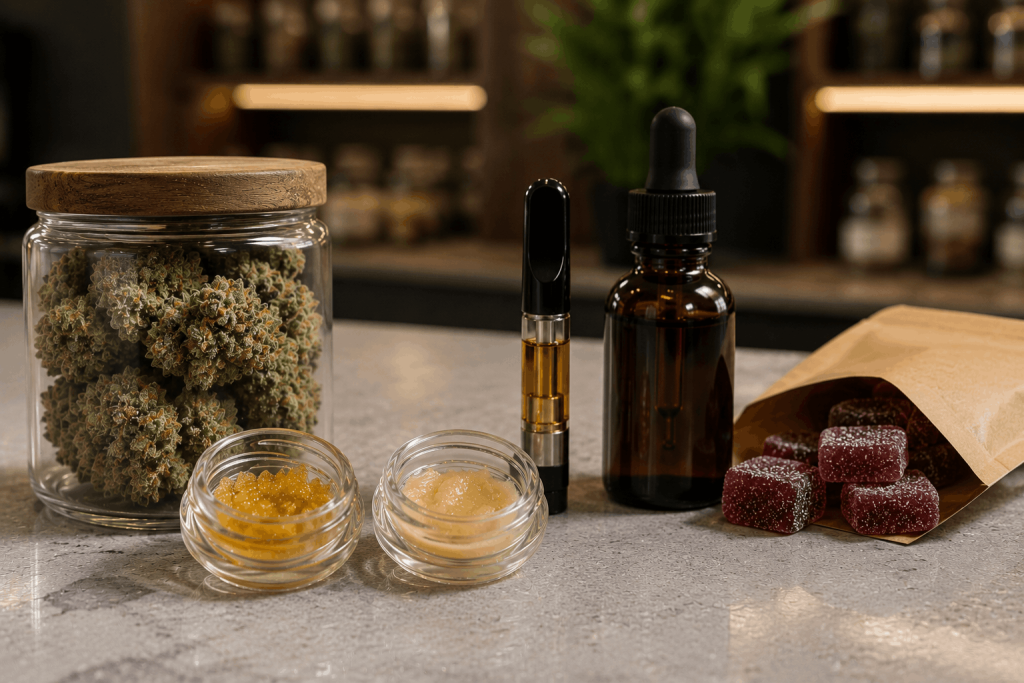
- THCV-rich flower when available
- THCV vape cartridges, often blended with THC for balance
- Tinctures and edibles with THCV included in the cannabinoid profile
- Daytime-formulated products that lean into the energetic effect
THCV is one of several minor cannabinoids showing up on more labels lately, alongside CBG, CBN, and CBC.
Who Might Be Interested in THCV Products?
If you’ve found regular THC too sedating or “heavy,” THCV-forward products might be a better fit. THCV is also worth a look if you tend to use cannabis during the day and want a lighter, more functional experience. THCV is generally not the right starting point if you’re new to cannabis or if you’re specifically looking for the relaxing body effects of high-THC indica strains. The easy way to find out is to ask a budtender to pull a THCV-forward option and compare it side by side with whatever you usually buy.
Stop By and We’ll Show You What’s Available
THCV product availability moves around. Best way to see what’s worth trying right now is to stop in and ask. We’ll show you what’s on the shelf and match it to what you’re looking for.
Shop THCV at Cannabis & Glass
Cannabis & Glass is a local, licensed dispensary serving Ontario, Oregon. We carry THCV-forward flower and concentrates when growers harvest them, plus our budtenders can help you spot THCV-rich cultivars on the menu. See current Ontario menu or ask a budtender during your next visit. Product availability changes frequently because high-THCV cultivars are still relatively uncommon.